
The Venezuela strike is bigger than you think.
It includes Hamas, Hezbollah, and nothing like this has ever been done before in history.

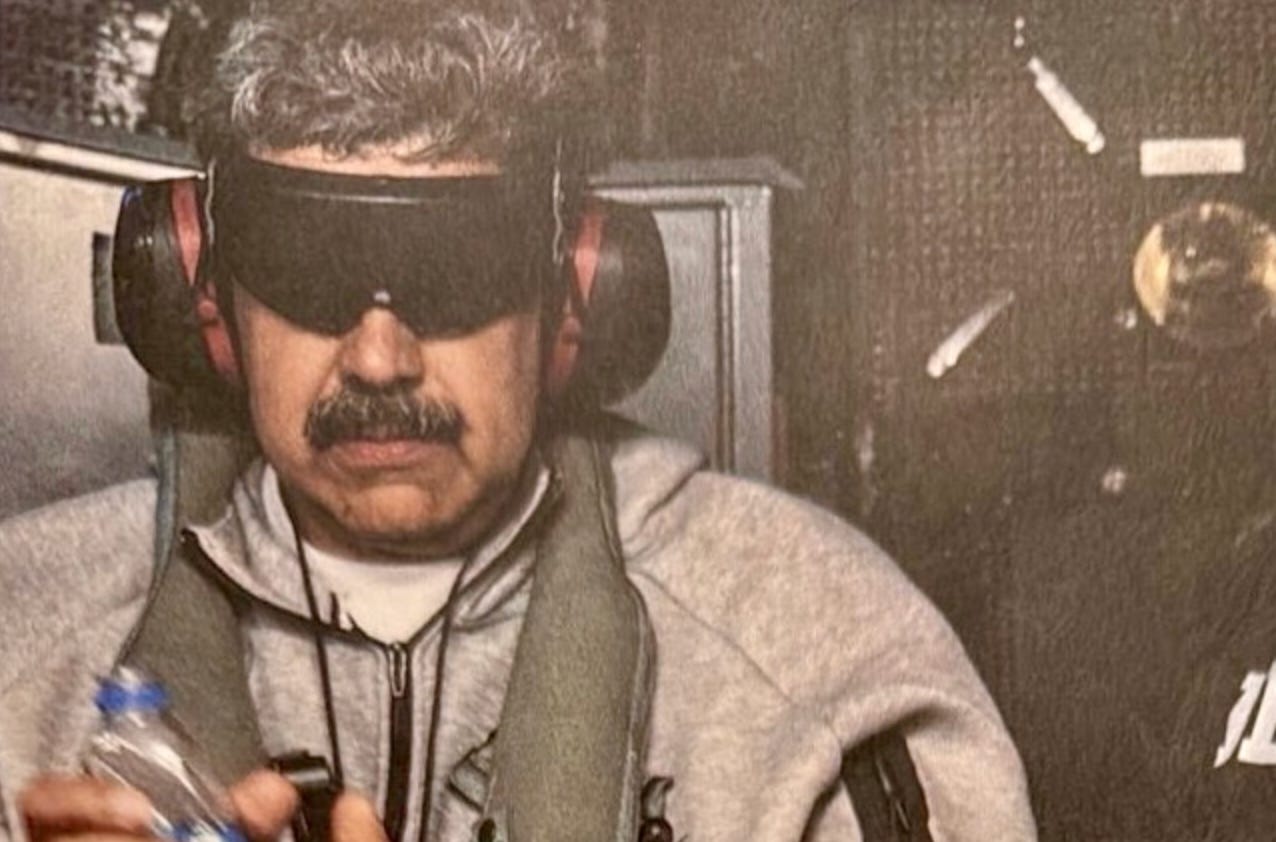
Photo: Venezuelan President Nicolas Maduro, in U.S. custody on board the U.S.S. Iwo Jima, by the White House, Jan. 3, 2026 via X.
Shortly after 2:00 AM local time, United States forces entered Venezuela, apprehended contested President Nicolas Maduro and his wife Cilia Flores, and took them into custody to face drug charges in the United States.
The significance of is hard to fully comprehend - this has never been done before in the history of the world.
Certainly foreign leaders have been captured after their armies were defeated in full scale wars, such as Iraq’s Saddam Hussein or Lybia’s Muammar al-Gaddafi; rulers have been toppled by their own armies in military coups, such as Pinochet’s overthrow of Chile; and still others have been deposed by local uprisings, such as Egypt’s Hosni Mubarak in the Arab Spring. And of course rulers have been assassinated more times than history can count. Yet never before has a force entered a foreign country, bypassed its military and security apparatus as if it barely even existed, and in just a few hours, taken the most highly protected person in the country into custody — as if he were no more than a local drug dealer.
EDIT — I’ve received some questions on Noriega, so I’m adding this note: The United States captured Panamanian ruler Manuel Noriega in 1990, only after fighting a full scale war called “Operation Just Cause,” which included not only two weeks of intense conventional warfare, but also the total destruction of the PDF, Panama’s armed forces. That is fundamentally different from the operation in Venezuela: a mere several hours during which a national ruler was snatched right out from under the nose of his own military. As previously noted, such a feat has never before been accomplished.
This operation could be compared to a chess game: one in which you disregard the usual rules, hop over all the other pieces, and capture your opponent’s king in the first move. Until now, rulers took some comfort in knowing they were relatively safe behind their armies. The United States has changed all that by, effectively, inventing a terrifying new chess piece.
The timing of this operation does not seem coincidental: it occurred in the same week that the United States:
warned Iran against shooting protesters even as the Islamic regime beings to falter;
warned the Hamas terror organization in Gaza to disarm;
signaled possible military action against the Hezbollah terror organization in Lebanon;
warned China against invading Taiwan; and
warned Russia’s Putin over rising death tolls in Ukraine.
Some critics say this will not impact other countries because of Venezuela’s weak military, pointing out that “Venezuela is not Iran.” In truth, there have been other weak militaries throughout history, but never before has a leader been simply plucked from power and taken into custody in this way.
The question, therefore, is not whether the United States can replicate such an operation elsewhere, but whether any world leader is willing to take that chance. America has demonstrated a completely novel military capacity, and this new reality will inevitably enter the thinking of U.S. adversaries.
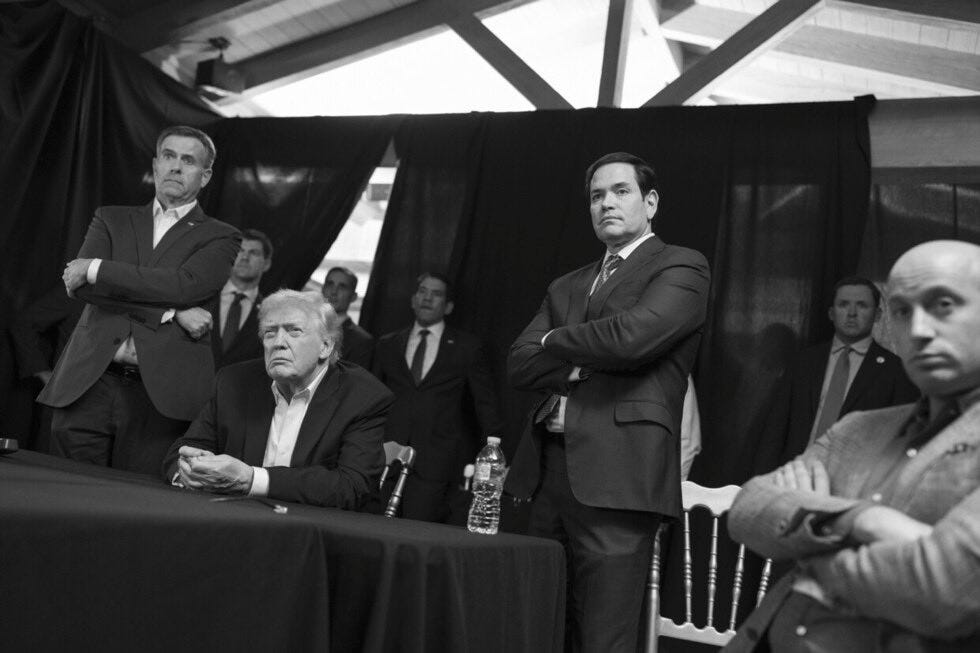
Photo: U.S. President Trump, Secretary of State Marco Rubio and others observe operations in Venezuela, by the White House via X.
The Venezuelan people want this.
Massive, widespread celebrations are breaking out both in Venezuela and within ex-pat communities around the world. On a more anecdotal note: Aleah Arundale, a close personal friend who has been helping Venezuelan migrants in Chicago, has been flooded with messages from Venezuelans she personally knows: some still in America as well as others who have been deported back to Venezuela, and all of the messages are ecstatically positive.
On the other hand, those condemning the operation include China, Russia, Iran, Colombia, Cuba, as well as the Hamas and Hezbollah terror organizations. Some notable American voices have joined this group of U.S. adversaries and internationally designated terror organizations, including New York Mayor Zohran Mamdani and Vermont Senator Bernie Sanders.
Venezuela hosts Hamas, Hezbollah and other American enemies.
It is barely reported in the media that Venezuela hosts military training camps for Hezbollah, troops from Russia, and has military partnerships with Hamas, Iran, and China. Clearly these military resources are not being placed in Venezuela in order to target Israel, Taiwan or Ukraine which lie on the other side of the world - rather they present a legitimate military danger close to the United States.
Did this operation violate the U.S. Constitution?
In a word: no.
Critics object that a President may not take military action without approval from Congress, implicitly referring to Article I, Section 8 of the U.S. Constitution which gives Congress the exclusive power to declare war. In truth, the last time Congress declared war was World War II. Since that time, Presidents from both parties have carried out dozens of military actions all over the world without officially declaring war, which the Supreme Court has consistently upheld as Constitutional.
Another objection is the claim that this operation violates the 1973 War Powers Resolution. In truth, the Resolution requires a President to inform Congress within 48 hours after a military action (not before), and to obtain Congressional approval only if such action lasts more than 60 days. In this case, Congress was certainly informed afterwards, and the action is presently far from the 60 day deadline. Furthermore, it is unclear whether the Resolution is Constitutionally enforceable at all: Presidents Clinton (in Kosovo) and Obama (in Libya) carried out military actions longer than 60 days without Congressional approval, and in both cases the Federal courts refused to intervene, citing (among other arguments) Constitutional grounds.
Furthermore, the White House has worked to frame this entire situation as a domestic law enforcement matter in support of Maduro’s indictment in U.S. Federal court, even going so far as to incorporate DEA agents within the forces that carried out the operation.
Did this operation violate international law?
This topic is less clear, as international caselaw is not sufficiently developed.
Critics have decried “flagrant violations” of international law, in particular, violations of Venezuela’s national sovereignty, an implied reference to Article 2(4) of the United Nations Charter which prohibits the use of force against foreign nations except under specific circumstances. However, Article 51 confirms an absolute right to self defense. The International Court of Justice has ruled that a country must be facing an “armed attack” before such self defense is justified.
The White House has characterized Venezuela’s drug smuggling as a violation of U.S. sovereignty and the equivalent of an “armed attack” noting the significant number of American deaths from the drug trade. There has not yet been a case that characterizes drug smuggling as the equivalent of an “armed attack” so this remains, in effect, an unexplored area of international law.
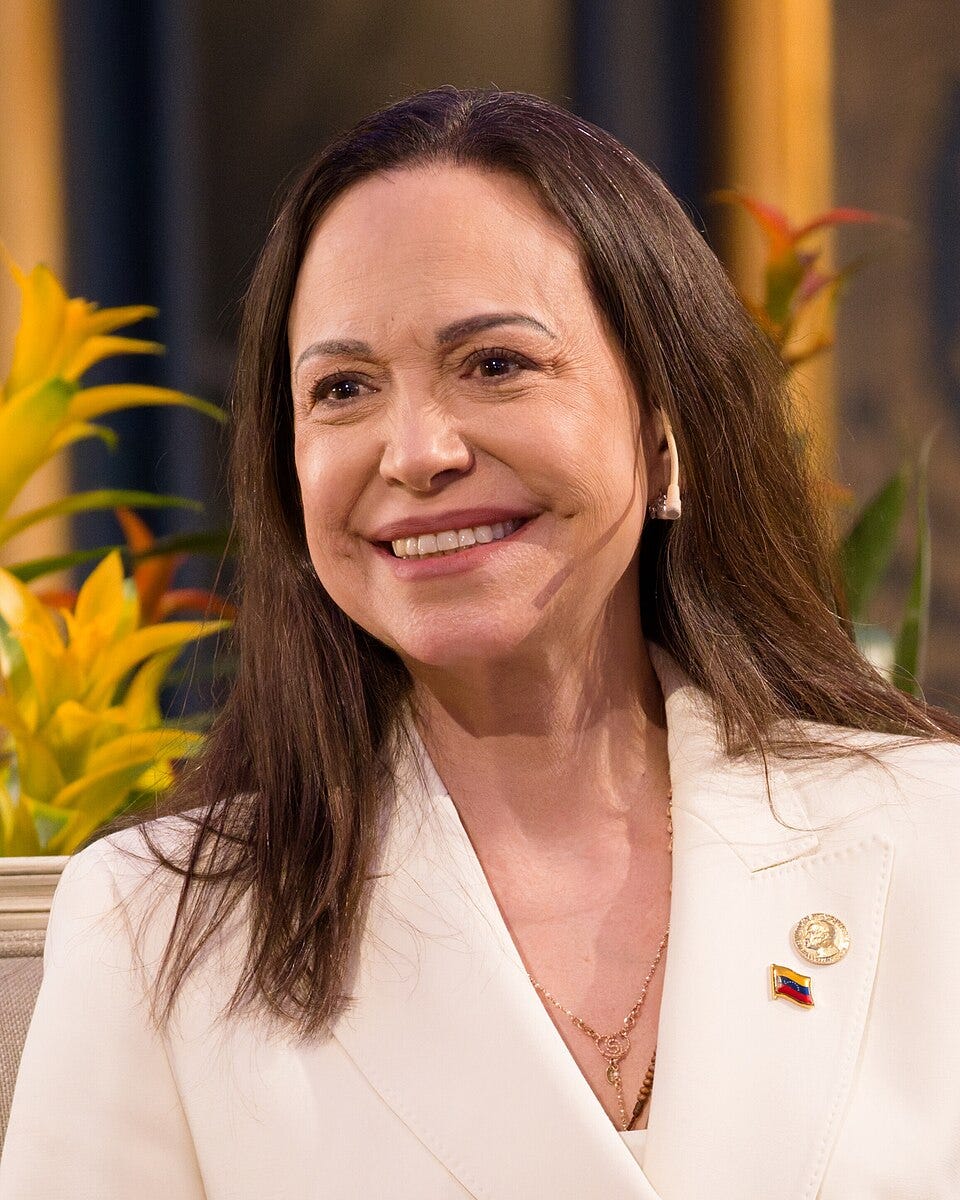
Photo: Venezuelan opposition leader and Nobel Peace Prize Laureate, Maria Corina Machado via Wikimedia Commons.

The United States might have a clearer case if it were to address Venezuela’s military cooperation with hostile powers, and the imminent threat they may pose to U.S. national security. Yet the simplest and most powerful argument comes from Venezuelan opposition leader and Nobel Peace Prize Laureate, Maria Corina Machado, who countered:
Look, some people talk about invasion in Venezuela and the threat of an invasion in Venezuela and I answered Venezuela has been already invaded. We have the Russian agents, we have the Iranian agents. We have terrorist groups such as Hezbollah, Hamas, operating freely in accordance with the regime. We have the Colombian guerrilla, the drug cartels that have taken over 60% of our populations and not only involved in drug trafficking, but in human trafficking in networks of prostitution. This has turned Venezuela into the criminal hub of the Americas.
However, international law does not seem to be the White House’s primary concern, as most forms of enforcement would require action by the United Nations Security Council, where all five permanent members (including the United States) hold veto power.
In short, while the strike on Venezuela is clearly consistent with U.S. law, and arguably consistent with international law, its meaning is much farther reaching than legal technicalities. Maduro’s stunning arrest serves as an enthusiastically welcomed ray of hope to the Venezuelan people, a serious warning to the enemies of the United States and its allies, and a demonstration of a new military capability never before seen in human history.